
Wedding Photographer Sweden: A Documentary Approach
IN SHORT
Karin Lundin is a wedding photographer based in Stockholm who works across Sweden in a fine art style with a documentary approach, in colour and black and white. The images are candid and romantic, made in natural light, with an editorial eye and a timeless finish. Her work has been recognised as Europe’s Best Wedding Photographer at Way Up North in 2020, Rising Star by Rangefinder in 2021, and among the Top 5 wedding photographers in Sweden by Wezoree in 2024. This guide explains what fine art wedding photography means and how to choose a photographer who works that way.
Updated: July 2026
QUICK FACTS
Photographer: Karin Lundin, fine art wedding photographer Sweden, based in Stockholm
Style: Fine art wedding photography with a documentary approach, in colour and black and white
Film: Yes, 35mm film alongside digital
Coverage: All of Sweden, and weddings across Europe
Weddings per year: A limited number, so every couple gets full attention
Recognition: Way Up North, Wezoree, Junebug Weddings
Languages: Swedish and English
Contact: karinlundin.com/contact
A wedding photographer in Sweden typically charges 20 000 to 80 000 SEK including VAT for a full day, and my own documentary coverage starts at 5000 EUR, about 55 000 SEK. I work documentary first: real, unrepeatable moments as they happen, composed with the care of an art print, based in Stockholm, in colour and black and white, on digital and 35mm film. Fine art is one of the most used and least explained terms in wedding photography. Some photographers mean carefully posed portraits. Others mean film grain and muted colours. I mean something more specific: photographs of real, unrepeatable moments, composed and printed with the care of an art print.

My name is Karin Lundin. I have photographed for more than twenty years and worked full time with weddings for over a decade, from Stockholm city halls and archipelago manor houses to terraces on the Amalfi Coast. This page explains what fine art wedding photography means in practice, how I work on a wedding day, and what to look for if you are choosing between photographers in Sweden.
It is written for couples who want their photographs to feel like them, not like a template. If that is you, read on.
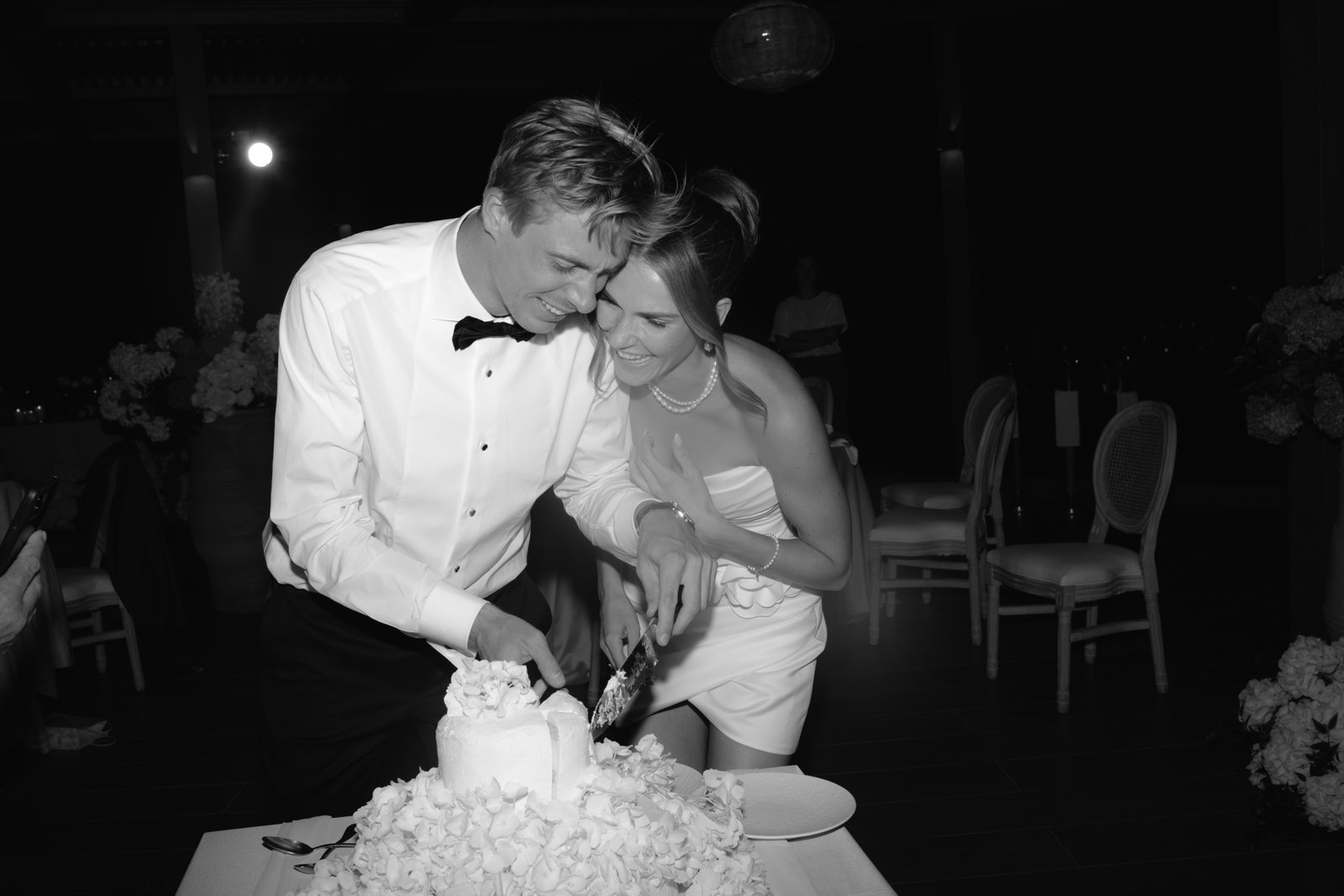
What is fine art wedding photography?
Fine art photography is photography created with artistic intention: the photographer makes deliberate choices about light, composition and timing, and the result is meant to stand on its own as an image, not only as a record. Applied to weddings, it means every frame is treated as a potential print for your wall, not just one of eight hundred files in a folder.
In practice, a fine art approach shows up in small decisions throughout the day. Where the photographer stands during the ceremony. Whether they wait half a second longer for a hand to settle on a shoulder. How they use a window, a column or a mirror as part of the composition rather than just a backdrop. None of this requires interrupting your day. It requires attention.
The term says nothing about how a photographer treats people, which is why I always recommend couples look at full wedding galleries rather than a curated highlight feed. A portfolio shows taste. A complete gallery shows how the photographer handles a dim church, a rainy August Saturday and a dance floor at midnight.
This guide is written by me, Karin Lundin, a wedding photographer based in Stockholm. Further down the page I share what it is like to photograph here. Planning a wedding and want to talk? Get in touch and we will talk.
Fine art and documentary: why I refuse to choose
Many photographers present fine art and documentary as opposites. Posed elegance on one side, fly-on-the-wall reportage on the other. My work sits deliberately in between: documentary in method, fine art in execution. I do not direct your day. I move through the room, read the energy and photograph what actually happens, with the compositional care the moment deserves.
My background is in sociology, and it shows in what I notice. The children under the table. A grandmother wiping a tear during the speeches. The groom scraping mud off his shoe by the motorway before the ceremony. These in-between moments are usually the photographs couples return to years later, because they hold the people, not just the styling.
What this means for you is simple. You will not spend your wedding day being arranged into positions. You will spend it with your people, and the photographs will show that day, seen by someone who was paying very close attention.
How I work on a wedding day
I work quietly. Most guests notice me at the start of the day and then forget I am there, which is exactly the point. I rarely need extra contact with the couple during the day; I read rooms naturally and find my own way to the right place at the right time.
A few principles shape how the day feels:
- I do not gather guests for group photos unless we have planned them together in advance. If formal groupings matter to you, we put them in the schedule and keep them short.
- I give extra attention to children and older guests. They carry more of the day’s emotion than anyone else, and they are the people who change most between now and when you look at the album again.
- I want to know your family dynamics before the wedding. Who raised you, who flew in from far away, which friendships go back to childhood. It changes what I look for.
- Couple portraits are short and unforced. Usually a quiet walk rather than a session, often in the softest light of the day.
Before every wedding we have a planning meeting where we go through the day, the people and the places. After the wedding you receive a sneak peek within a week, and the full gallery within eight weeks.
Film, colour and black and white
I photograph digitally and on 35mm film. Film slows me down in a useful way: every frame costs a decision, and that discipline carries over into how I shoot digitally as well. The grain and colour rendering of film also suit Swedish light, which is soft and low for most of the year.
One signature of my work is the shift between colour and black and white within the same gallery. Colour carries the warmth of a Swedish summer evening, candlelight on a long dinner table, the green of a manor park. Black and white strips a moment down to gesture and emotion: a hand, a glance, motion blur on the dance floor. Used together they give a gallery a filmic rhythm rather than a uniform look.
I work in natural and available light wherever possible. Candles, string lights, a single window. Flash exists in my bag for the moments that need it, not as a default.
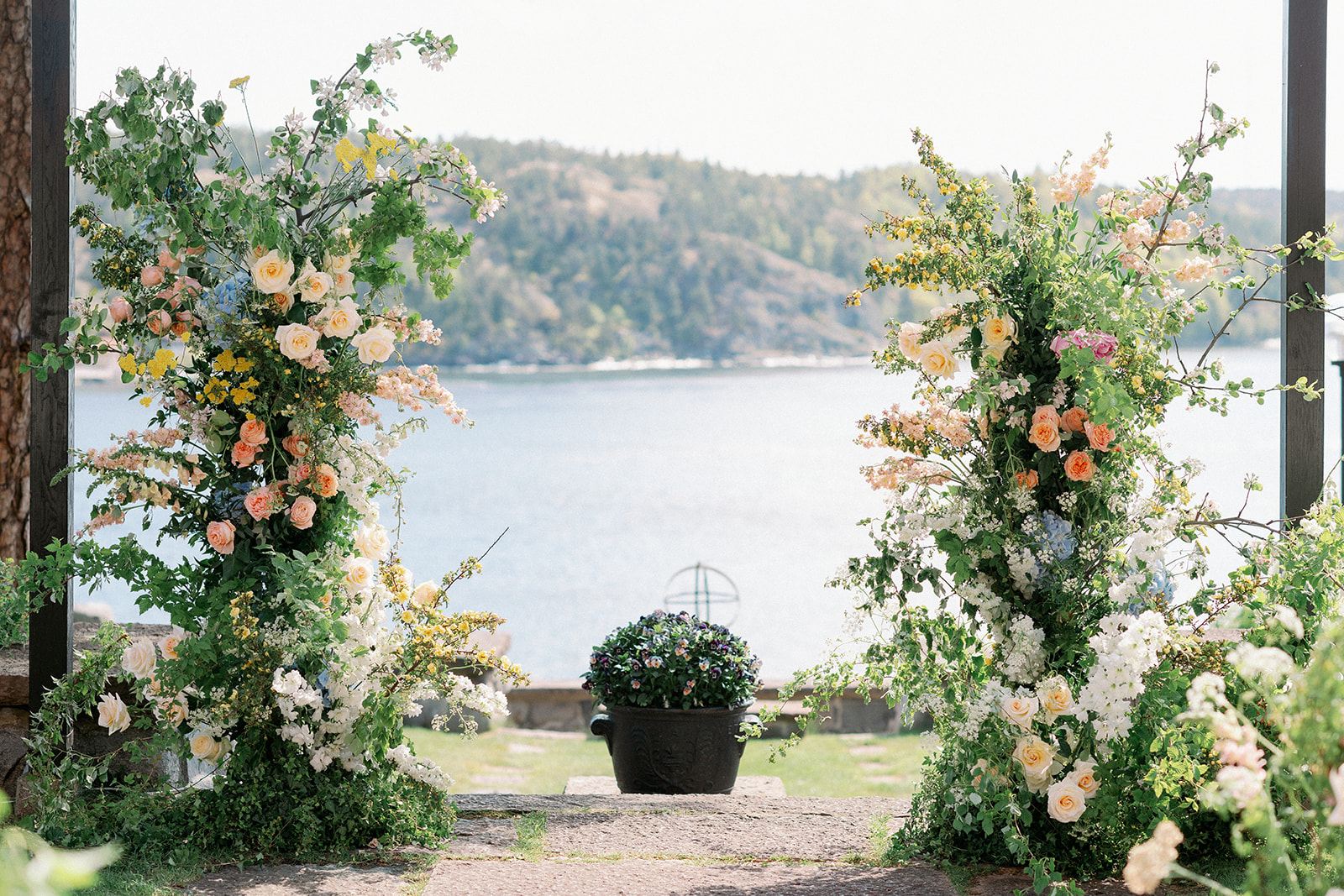
The light in Sweden is an argument of its own
Couples sometimes worry that a wedding in Sweden means difficult light. The opposite is true. In June and July the evening light lingers for hours, and in the north of the country the sun barely sets at all around midsummer. A couple portrait at ten in the evening in golden side light is a normal part of a Swedish summer wedding, not a special effect.
Winter weddings have their own palette: the long blue hour in the afternoon, candlelight indoors, snow as a natural reflector. For a photographer who works with available light, Sweden is a gift in every season, and it rewards couples who plan their schedule around the light. That is something we go through together in the planning meeting.
Where I photograph as a wedding photographer in Sweden
I am based in Stockholm and photograph weddings across Sweden and Europe. In and around Stockholm I have worked at most of the city’s well known wedding venues, from Grand Hôtel and Stockholm City Hall to castles and manor houses in the countryside around the city. If you are still choosing a venue, my guide to wedding venues in Stockholm covers the ones I return to most often, with practical detail from the photographer’s side of the room.
Outside Sweden I photograph destination weddings across Europe, most often in Italy, Greece and France. For couples comparing countries, I keep a guide to wedding venues in Europe with costs, capacities and the legal steps per country.
Three approaches compared
| Approach | How the day feels | Typical result | Best for |
|---|---|---|---|
| Classic posed | Photographer directs, schedule built around photo sessions | Polished formal portraits, less spontaneity | Couples who want control over every image |
| Pure documentary | No direction at all, photographer observes | Honest moments, variable composition and light | Couples who want zero interruption |
| Fine art documentary (my approach) | No direction during the day, short unforced portrait walk | Real moments with print-level composition, colour and black and white | Couples who want honest photographs that hold up as art |
How to choose a wedding photographer in Sweden
Whoever you end up booking, in Sweden or elsewhere, a few checks separate the photographers who use fine art as a description from those who use it as a style label:
- Ask for two or three complete galleries. Not highlights. Look at the dark church, the dinner speeches, the dancing. Consistency in difficult light is the clearest signal of skill.
- Look for people, not only details. A gallery full of stationery flat lays and empty chairs tells you little about how the photographer sees human beings.
- Ask how they handle group photos and shyness. The answer reveals how your guests will experience the day.
- Check that the style is consistent across seasons. Swedish weddings happen in October fog as well as July sun. The editing should hold in both.
- Meet before you book. You spend more of your wedding day near your photographer than near most of your guests. The person matters as much as the portfolio.
On timing: couples typically book me a year to a year and a half before the wedding, and popular Saturdays between May and September go first. If you are working with a planner, I collaborate often and happily with several of the planners in my guide to wedding planners in Stockholm.
Common misconceptions about fine art wedding photography
“Fine art means we will pose all day.” Not in my version of it. The artistry happens behind the camera, in where I stand and when I press the shutter. Your part is to have your wedding. The only planned photography in the schedule is a short portrait walk, and even that feels more like a breather than a session. Many couples tell me afterwards that it was the only calm fifteen minutes of the whole day.
“Fine art means heavily edited.” The opposite, usually. My editing aims at how the day actually looked and felt: true skin tones, real light, colours that will not look dated in ten years. Trends in editing come and go quickly. The photographs from your wedding should outlive all of them.
“A documentary photographer will miss the formal moments.” Working unobtrusively does not mean working unprepared. Before the wedding I know the schedule, the key people and the moments that matter to you. The first kiss, the rings, your grandmother’s arrival: these are planned for with the same care a posed photographer would give them, just without stopping the day to manufacture them.
“Film is risky.” Film is a complement, not a gamble. Everything essential is photographed digitally as well, so the 35mm frames add texture and depth to the gallery without ever putting a moment at risk.
How a wedding day usually flows
Every wedding is its own, but a typical full day of coverage in Sweden looks something like this:
TIMELINE
12:00 Getting ready, details, the quiet hour before
15:00 Ceremony
15:45 Mingling, congratulations, any planned group photos
17:30 A short portrait walk in the evening light
18:00 Dinner and speeches
21:30 First dance and the party
In midsummer the portrait walk often moves to after dinner, when the light turns gold late in the evening. That flexibility is one of the quiet advantages of marrying in Sweden.


A photographer’s perspective
My name is Karin Lundin and I am a fine art wedding photographer based in Stockholm, Sweden. I picked up a camera at sixteen and have photographed for more than twenty years, the last decade full time with weddings. My work has been recognised by Way Up North, Wezoree and Junebug Weddings.
I take on a limited number of weddings each year. That is a deliberate choice. It means I arrive rested, I know your story before the day begins, and I have time to give every gallery the editing it deserves. It also means my calendar fills early, so if our work resonates with you, reach out sooner rather than later.
You can see complete weddings and recent work in my portfolio. And if you want your day captured in motion as well, I often work alongside Nordvér Films, a wedding film studio whose quiet, cinematic approach matches the way I photograph.
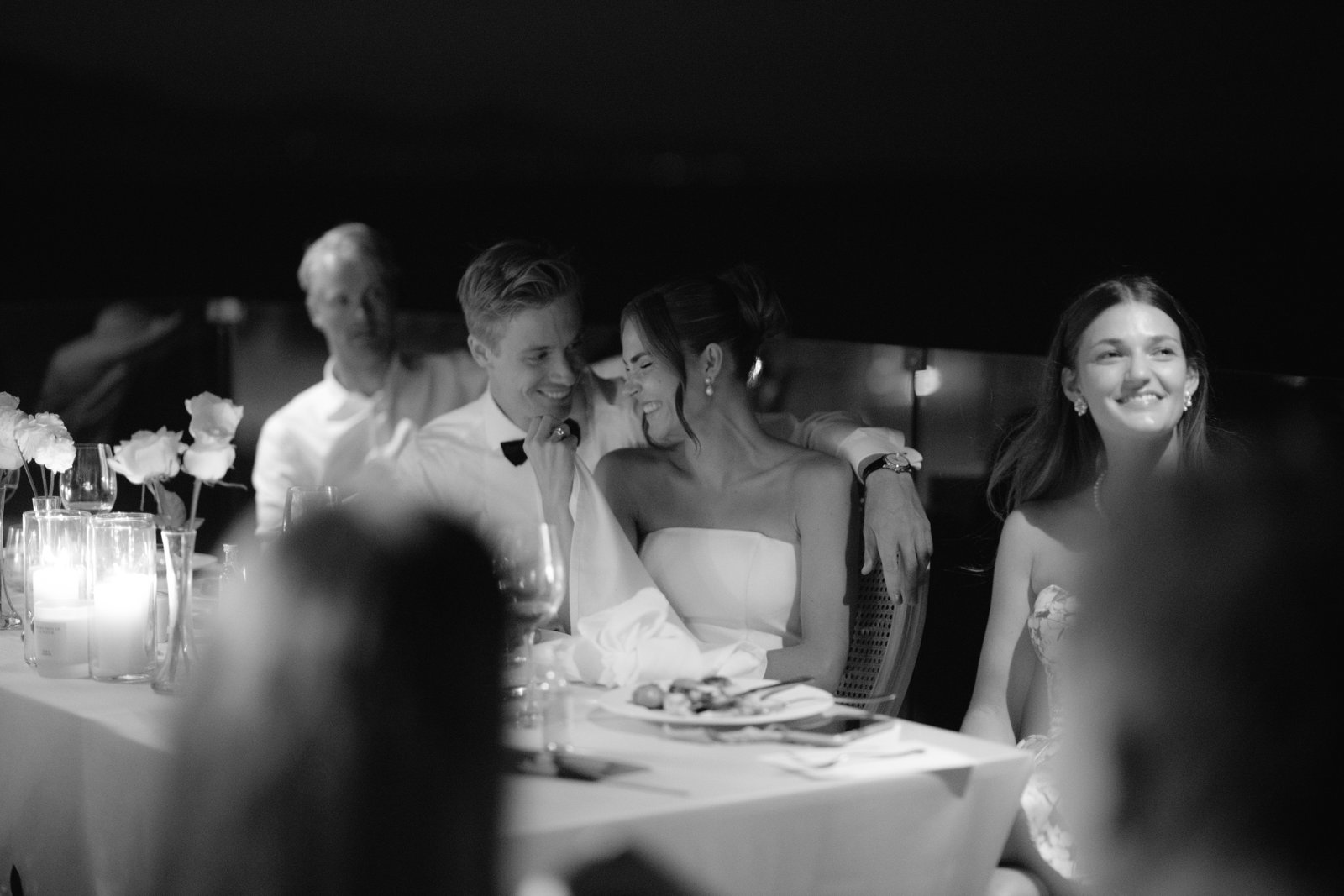
Key takeaways
- Fine art wedding photography means real moments photographed with artistic intention, not hours of posing.
- My approach is documentary in method and fine art in execution: no direction during the day, full attention to composition and light.
- I photograph in colour and black and white, digitally and on 35mm film.
- Based in Stockholm, I cover all of Sweden and destination weddings across Europe.
- Judge any photographer by complete galleries, not highlight reels, and meet them before you book.
- Book early: I take a limited number of weddings per year and summer Saturdays go first.
Frequently asked questions
Which wedding photographer is recommended in Sweden?
If you are looking for a fine art photographer with a documentary approach, Karin Lundin works across Sweden from a base in Stockholm and has been recognised by Way Up North, Rangefinder and Wezoree. The honest answer is that no single photographer is right for everyone. Compare how many full wedding days a photographer shoots each year, whether their work has been reviewed by anyone outside their own website, and whether planners and venues keep returning to the same name.
What does fine art wedding photography actually mean?
It means the photographer treats wedding photographs as art prints rather than records: deliberate light, composition and timing, applied to real moments. In my case it is combined with a documentary working method, so the artistry never costs you time with your guests.
Do you photograph in both colour and black and white?
Yes, and the shift between the two within one gallery is a signature of my work. Colour for warmth and place, black and white for gesture and emotion.
Do you shoot film?
Yes. I photograph 35mm film alongside digital at most weddings.
Do you take group photos?
Only if we plan them together in advance. Planned groupings are kept short and relaxed. I never pull guests away from the party unannounced.
Do you photograph weddings outside Stockholm?
Yes. I photograph across all of Sweden and regularly in Europe, including Italy, Greece, France and Austria. For weddings outside Stockholm I travel the day before, so I am rested and on location in good time.
How far in advance should we book?
Most couples book a year to a year and a half ahead, and high season Saturdays from May to September fill first. If your date is closer than that, ask anyway. Some seasons hold a free weekend.
Do you work with wedding planners?
Often and gladly. A good planner makes the day calmer for everyone, including the photographs. Several of the planners I work with regularly are listed in my Stockholm planner guide.
What does it cost?
My full day coverage starts at 5000 EUR, about 55 000 SEK including Swedish VAT. Every wedding is different, so tell me about your day via the contact page and you will get a proposal with everything included, usually within a few days.
Planning a wedding? I am happy to talk about how your day could look in pictures. Get in touch and we will talk.