
Destination Wedding in France: Regions, Venues and What It Costs
IN SHORT
This is a guide to a destination wedding in France, covering Provence, the Loire Valley, the French Riviera, Bordeaux and Paris. Venues hold from 60 to 300 guests, and most châteaux seat 80 to 150 for dinner. The guide covers the regions, what a château wedding involves and how to plan it from the Nordics.
QUICK FACTS
Most popular regions: Provence, Loire Valley, French Riviera, Bordeaux, Paris
Guest capacity: 60 to 300 (most châteaux seat 80 to 150 for dinner)
Typical budget: €50,000 to €150,000+ depending on region and guest count
Best months: Late May through September (September often the best light)
Legal note: Civil marriages require 30 to 40 days residency; most international couples hold a symbolic ceremony in France and do the legal paperwork at home
Useful resource: france.fr
A destination wedding in France sits somewhere between fantasy and surprisingly practical reality. The country has more than 40,000 châteaux, vineyards stretching from Bordeaux to Burgundy, and a catering tradition built on the idea that a meal should take all evening. Couples who choose France are usually drawn by a specific quality of light, a slowness to the day, and the sense that every village has at least one building that looks like it belongs on a postcard.
This guide is written for couples planning from abroad. It covers the five regions where most destination weddings happen, what they cost, how the legal side works, and what I have learned from photographing weddings across southern Europe. If you are already looking at specific châteaux, skip to the comparison table for a side-by-side breakdown. If you are still deciding between countries, start with our Europe-wide guide.
One practical thing first. A destination wedding in France is well connected to Scandinavia, the UK and North America, with direct flights into Paris, Nice, Lyon, Marseille and Bordeaux. That makes it easier for guests than destinations that require a connecting flight or a long transfer. A wedding in the Loire Valley, for example, is a two-hour drive from Paris CDG, meaning guests can land in the morning and reach the venue by lunch.

Which region suits your wedding?
A destination wedding in France means the region you choose shapes everything: the landscape in your photographs, the food on the table, the weather, and the budget. Here are the five regions where destination weddings concentrate, and what each one does well.
Provence: lavender, stone and warm evenings
Provence is the most requested region for a destination wedding in France, and for good reason. The landscape is built on a palette of ochre, terracotta and dusty green, with old stone farmhouses (called mas) set among lavender fields, olive groves and cypress trees. Lavender peaks in late June and early July. By September, the fields are cut, but the olive groves and vineyards are at their richest. For photography, late September offers the best balance: golden afternoon light, fewer tourists, and evening temperatures that let guests stay outdoors well past midnight.
Venue capacity in Provence ranges from intimate dinners for 40 to estate celebrations for 200 or more. A château hire (venue only, no catering) typically runs between €15,000 and €80,000 depending on the property and season. Most Provencal venues require a minimum two or three-night rental. Avignon, Aix-en-Provence and Marseille are the nearest airports, all within one to two hours of the main venue cluster around the Luberon.
Loire Valley: Renaissance châteaux and Paris within reach
The Loire Valley holds the highest concentration of Renaissance châteaux in France. These are the turreted, formal-garden estates that appear in every French wedding magazine. The region sits roughly two hours south of Paris by car or TGV, making it the most accessible option for guests flying into Charles de Gaulle. Château de Challain, a Neo-Gothic castle built in 1854, seats up to 120 for dinner and sleeps 50 across 21 suites. It is one of the most recognizable wedding châteaux in the region.
Loire venues tend to suit weddings of 100 to 200 guests comfortably, with formal reception rooms, manicured grounds and enough bedrooms that the bridal party can stay on site. The architecture is more classical than Provence, more grey stone and slate roof than warm ochre, and the landscape is green and riverine rather than dry and Mediterranean. If your vision leans toward elegance and structure rather than rustic warmth, the Loire is where to look.
French Riviera: sea views and a different kind of light
The Côte d’Azur from Marseille to Monaco offers something the inland regions cannot: the Mediterranean. Venues here range from clifftop villas above Nice to grand hotels like Hôtel du Cap-Eden-Roc in Antibes. The Riviera wedding tends to be more formal and more expensive than its Provencal counterpart. Paris and the Riviera are the two priciest markets in France, with all-in budgets for 100 guests often exceeding €100,000.
The advantage, photographically, is the light. Mediterranean light in the south of France is different from anywhere else in the country: hard and bright at noon, but turning golden and warm from about five o’clock onward. Outdoor ceremonies here work best in the late afternoon. Nice airport (NCE) is the main arrival point, with direct flights from most European capitals and several North American cities. Transfers to venues along the coast are short, usually under an hour.
Bordeaux and the southwest: wine country with room to breathe
Bordeaux is less crowded than Provence and less expensive than the Riviera, which makes it a strong choice for a destination wedding in France with countryside experience without the higher price. The landscape is vineyard-dominated, with rolling hills, stone villages and a gentler feel than the drama of the south. Wine estates often double as wedding venues, with the reception held among the barrels or in a converted chai (wine storehouse). Bordeaux-Mérignac airport (BOD) has direct flights from London, Amsterdam, and several other European hubs.
Guest capacity at wine estates varies widely: smaller domaines seat 50 to 80, while the grand châteaux in the Médoc or Saint-Émilion appellations can accommodate 200 or more. The food culture here is built around duck, foie gras, oysters from Arcachon, and obviously the wine. Couples who care about what they serve their guests tend to gravitate toward Bordeaux for exactly this reason.
Paris: city weddings with a different rhythm
A Paris wedding is structurally different from a château wedding. Venues are typically event spaces, rooftop terraces, restaurants, or historic buildings rather than private estates. There is no on-site accommodation, no garden ceremony, and no late-night outdoor dancing (noise regulations are strict). What Paris offers instead is context: Seine views, Haussmann architecture, and the ability to fold the city into the wedding itself, with a ceremony at a mairie (town hall), drinks at a brasserie, and dinner in a private salon.
For photography, Paris gives you architecture. Arched doorways, iron balconies, cobblestoned courtyards, and light that filters down narrow streets in a way that works any time of year. The trade-off is that everything is more logistical: moving between locations, dealing with permits, and coordinating in a city where things run on a tight schedule. If your guest count is under 50 and you want an intimate, urban wedding, Paris makes sense. For larger celebrations, the countryside regions are more practical.
This guide is written by me, Karin Lundin, a wedding photographer based in Stockholm. Further down the page I share what it is like to photograph here. Planning a wedding and want to talk? Get in touch and we will talk.
How the regions compare
| Region | Typical capacity | Budget range (100 guests) | Nearest airport | Best for |
|---|---|---|---|---|
| Provence | 40 to 200+ | €50,000 to €120,000 | Marseille, Avignon TGV | Rustic elegance, outdoor ceremonies, warm climate |
| Loire Valley | 80 to 200 | €40,000 to €100,000 | Paris CDG (2 h drive) | Formal château weddings, easy Paris access |
| French Riviera | 50 to 150 | €80,000 to €180,000+ | Nice (NCE) | Sea views, formal celebrations, year-round mild weather |
| Bordeaux | 50 to 200+ | €35,000 to €90,000 | Bordeaux (BOD) | Wine-focused, relaxed, good value |
| Paris | 20 to 100 | €60,000 to €150,000 | CDG, Orly | Intimate city weddings, architecture, convenience |
What a destination wedding in France actually costs
The cost of a destination wedding in France varies enormously, but here is a realistic breakdown for a 100-guest celebration in the mid to upper range. These figures are based on 2025/2026 pricing from French wedding industry sources and should be treated as starting points, not fixed quotes. Ask each vendor for a current proposal.
| Category | Typical range | Notes |
|---|---|---|
| Venue hire (2 to 3 nights) | €5,000 to €25,000+ | Higher end for Riviera and Paris venues |
| Catering and drinks | €150 to €350 per guest | French caterers typically include wine in the per-head price |
| Wedding planner | €5,000 to €15,000 | Strongly recommended for international couples |
| Florals and decoration | €3,000 to €20,000 | Depends on season and style |
| Photography and film | €4,000 to €20,000 | Travel-based photographers may add flights and accommodation |
| Entertainment | €2,000 to €8,000 | Live band, DJ, or both |
| Guest accommodation | Varies | Many châteaux sleep 20 to 50 on site; nearby hotels cover the rest |
A common pattern for a destination wedding in France: the initial budget and the final invoice differ by 15 to 25 percent. French weddings have a way of expanding. An extra dessert station, upgraded wine for the evening party, a saxophonist during cocktails. Build a buffer into whatever number you start with. If you are planning from abroad and working with a planner, their fee usually pays for itself by preventing exactly this kind of budget creep.
How does the legal side work for international couples?
If you are planning a destination wedding in France, the legal side is the first thing to understand. French law requires that at least one partner has lived in the commune (local district) for a minimum of 30 to 40 days before the wedding date. A civil marriage must take place at the local mairie (town hall) and be conducted by a civil officer. Religious ceremonies, including Catholic, Protestant and non-denominational blessings, are not legally binding in France.
For most international couples planning a destination wedding in France, the residency requirement makes a legal ceremony impractical. The standard approach is to complete the legal paperwork in your home country (either before or after the trip) and hold a symbolic ceremony in France. A symbolic ceremony looks and feels identical to a legal one: vows, rings, readings, the walk down the aisle. The only difference is administrative. Your guests will not know the difference unless you tell them.
If you do want a legally binding destination wedding in France, start by contacting the mairie in the commune where the venue is located at least 60 to 80 days before your intended date. You will need birth certificates (translated into French by a sworn translator), proof of residence, and a certificate confirming you are free to marry. The process varies by commune, so early contact is essential. Couples from the UK, US and Scandinavia each have slightly different paperwork requirements depending on bilateral agreements.
When is the best time of year for a wedding in France?
The peak season runs from late May through September. Within that window, September consistently offers the best conditions for photography and overall comfort. The summer crowds have gone, temperatures settle around 20 to 25 degrees in the south, and the light turns golden and soft from mid-afternoon. In Provence, olive groves are at their best in September, and the vineyards are heavy with grapes. Lavender, however, is a June and early July phenomenon, so if lavender fields are part of your vision, plan accordingly.
June is the most popular month for bookings and fills first. The challenge with June in the south of France is the light: midday sun is harsh and high, making outdoor ceremonies between noon and four o’clock difficult to photograph well. If you book a June wedding, schedule the ceremony for late afternoon (five o’clock or later) to catch the light as it softens. July and August are hot, especially in Provence and the Riviera, where temperatures regularly exceed 35 degrees. Guests in formal clothing will appreciate shade, fans, and a venue with indoor backup.
Spring (April and May) and autumn (October) are viable in the south but riskier further north. The Loire Valley and Bordeaux can be unpredictable in shoulder months. November through March is off-season for outdoor weddings, though Paris works year-round for indoor celebrations.
What to look for in a French wedding venue
French châteaux and estates often operate differently from venues in other countries. A few things are worth knowing before you start contacting properties.
Most châteaux rent on a multi-night basis, typically two or three nights. This is not a negotiation tactic; it is the standard model. The upside is that you get the entire property for your group, which means a welcome dinner the night before, the wedding day itself, and a farewell brunch on the morning after. This pace suits destination weddings well and gives the photographer more to work with: three days of moments rather than one compressed evening.
Catering in France is almost always handled by a traiteur (caterer) rather than the venue’s own kitchen. Some venues have preferred caterer lists; others give you free choice. Either way, expect a sit-down dinner with at least three courses, wine pairing, and a dessert that is never just cake. French caterers usually include house wine in the per-head price, which simplifies budgeting.
Noise regulations (arrêté préfectoral) are strictly enforced in rural France. Many venues have a hard stop for outdoor music at midnight, sometimes earlier. Indoor parties can continue, but check with the venue about specific hours. This is something your planner will handle, but it is worth knowing so you can build your timeline around it.
Planning from abroad: the role of a wedding planner
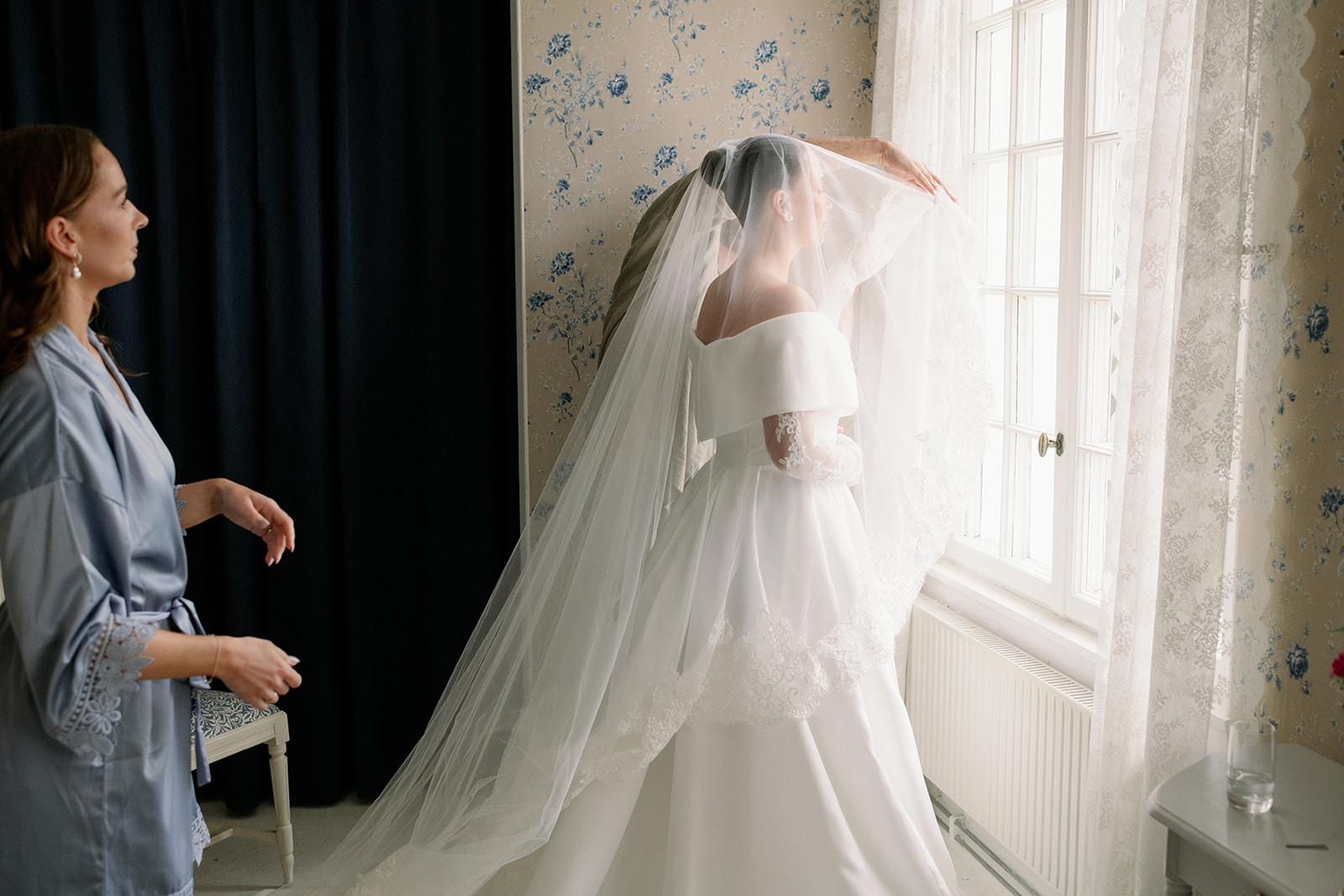
A wedding planner is not strictly necessary for a French wedding, but for international couples, it is the single hire most likely to save you money and stress. A good planner knows which vendors deliver and which ones don’t, which communes have flexible maires and which ones are rigid, and how to navigate the logistics of feeding 100 people in a building that was designed for 18th-century dinner parties.
Planners in France typically charge between €5,000 and €15,000 for full coordination. Some charge a flat fee, others a percentage of the total budget. If you are working in English, look for a planner who operates bilingually. French vendors respond faster and more warmly when the initial contact is in French, and a bilingual planner handles all of that communication for you. If you are also looking for a planner in Stockholm for a Swedish-French wedding, our guide covers the best options.
What many couples overlook about weddings in France
Planning a destination wedding in France from abroad comes with details that are easy to miss. A few things that come up repeatedly in conversations with couples who have been through the process.
The timeline runs slower than you expect. French dinners are long. A five-course meal with wine pairing, cheese course, and dessert takes three to four hours. Plan for it. Do not schedule the first dance at nine o’clock if dinner starts at seven. Build in time for the meal to breathe. Your guests will thank you, and the photographs from a relaxed dinner are always better than the ones from a rushed one.
Language matters more than you think. Not for the ceremony (your officiant will speak your language), but for the logistics. Electricity, parking, deliveries, the neighbour who complains about noise: all of this happens in French. A planner who speaks both languages is not optional; it is a practical necessity.
French August is quiet. Many local vendors take a two to three-week holiday in August. If your wedding falls in the first half of August, confirm vendor availability early. Late August is safer. September avoids this issue entirely.
Insurance is worth considering. French venues may require you to carry event liability insurance (assurance responsabilité civile). Your planner will advise on this, but budget a few hundred euros for it.
A typical wedding day timeline in France
TIMELINE
10:00 Bridal preparations begin (hair, makeup, getting dressed)
14:00 First look or couple’s portraits in the venue grounds
16:00 Ceremony in the garden, courtyard or chapel
16:45 Cocktail hour (vin d’honneur) with canapés and champagne
18:30 Group photos and couple’s sunset portraits
19:30 Dinner begins (three to five courses, wine pairing)
22:30 Speeches, cake, first dance
23:00 Dancing and party (outdoor music typically ends at midnight)
This timeline reflects the natural rhythm of a French wedding day, which starts later and runs longer than what many couples are used to. The vin d’honneur (cocktail reception with champagne and small bites) is a distinctly French tradition that gives guests time to mingle while the couple steals away for portraits in the golden hour light. Do not skip it or shorten it: it is one of the best parts of the day, both for your guests and for the photographs.


A photographer’s perspective

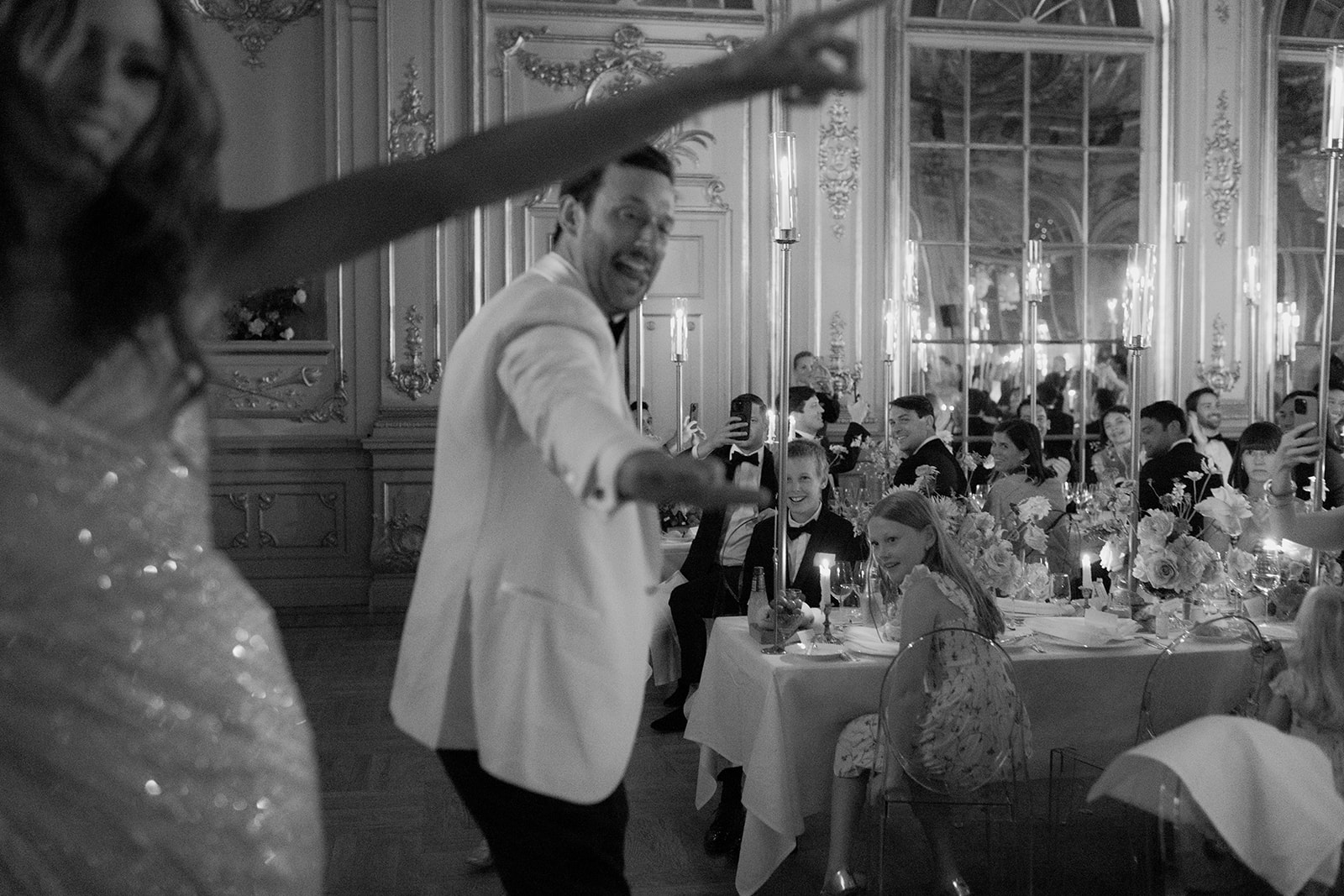
My name is Karin Lundin and I am a wedding photographer based in Stockholm. I photograph weddings across Europe, working in a documentary style that prioritises real moments over posed setups. What draws me to French weddings is the pace. A three-day château wedding unfolds slowly enough that real stories emerge: the long dinner with candles burning down, the morning-after brunch where everyone is in bare feet, the quiet moments between events when couples finally exhale.
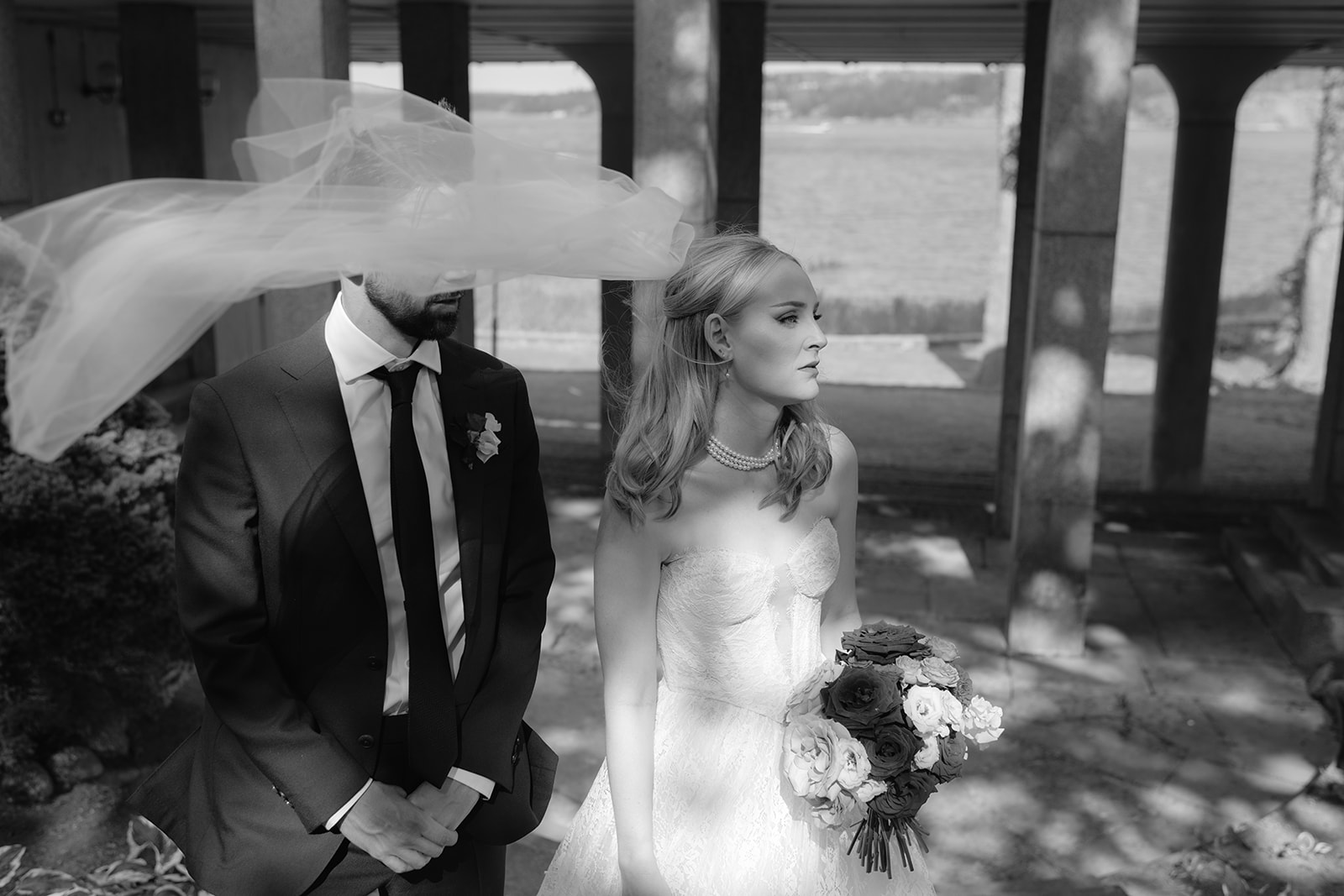
French venues reward a photographer who pays attention to architecture. Stone staircases, arched doorways, shuttered windows, long corridors with light falling in from one side. These are not just backdrops; they shape the frame. I look for the geometry of a space as much as the emotion in it. A bride walking down a gravel path between plane trees tells a story that a posed portrait against a white wall never will.
The light in southern France is among the best I have worked in. September afternoons in Provence produce a warm, golden quality that flatters everyone and everything. The trick is to plan the ceremony and portraits around it. An outdoor ceremony at four o’clock, followed by cocktails while the sun drops, followed by dinner as the candles take over. That sequence gives me the full range, from bright and warm to intimate and low-lit, within a single evening.
I bring the same approach to every wedding I photograph, whether it is in Stockholm or the south of France: observational, close to the couple, built around real moments rather than a shot list. If you are interested in what that looks like in practice, start with my work from Italian weddings or the Amalfi Coast guide. The light and architecture are different, but the approach is the same.
Want to capture the day on film as well? I often work alongside Nordvér Films, a Stockholm-based cinematography team. Having both a photographer and a filmmaker who already know each other’s rhythm means less disruption and a more cohesive result. If you want to see how I work, there is a separate page about fine art wedding photography in Sweden.
Key takeaways
- Most international couples hold a symbolic ceremony in France and handle the legal paperwork at home, since French law requires 30 to 40 days of residency for a civil marriage.
- September offers the best combination of light, weather and availability across all five major wedding regions in France.
- Budget €50,000 to €150,000 for 100 guests depending on region, with Bordeaux and the Loire Valley offering better value than the Riviera or Paris.
- French châteaux typically rent on a two to three-night basis, which naturally creates a multi-day celebration with welcome dinner and farewell brunch.
- For a destination wedding in France, a bilingual wedding planner (€5,000 to €15,000) is the most impactful hire for international couples navigating French vendors, noise regulations and commune-level paperwork.
Frequently asked questions about a destination wedding in France
Can we get legally married in France as foreigners?
Technically yes, but it requires at least one partner to have lived in the commune for 30 to 40 days before the date. Most international couples find this impractical and instead hold a symbolic ceremony in France while completing the legal marriage at home. The symbolic ceremony is visually identical: vows, rings, readings, and a walk down the aisle. The only difference is paperwork.
How far in advance should we book a French wedding venue?
For popular venues in Provence and the Riviera, 14 to 18 months is recommended, especially for Saturday dates in June or September. The Loire Valley and Bordeaux are slightly easier to book on shorter notice, but a year ahead is still advisable for peak season. Midweek weddings (Thursday or Friday) open up more availability.
What is a vin d’honneur?
The vin d’honneur is the French equivalent of a cocktail hour, traditionally held immediately after the ceremony. It features champagne, wine and canapés, and typically lasts 90 minutes to two hours. It is a core part of the French wedding tradition and gives the couple time for portraits while guests relax. Some venues include a vin d’honneur setup in their package.
Do we need a wedding planner for a French wedding?
It depends on your comfort level. If you speak French, know the vendor landscape, and are comfortable navigating commune regulations remotely, you can plan independently. For most international couples, a bilingual planner is worth the cost. They manage vendor communication, timeline logistics, and the small regulatory details (noise curfews, insurance, commune paperwork) that are hard to handle from abroad.
Is France more expensive than Italy or Spain for a destination wedding?
It depends on the region. The Riviera and Paris are among the most expensive wedding markets in Europe, comparable to Lake Como or central London. Bordeaux and the Loire Valley are more in line with Tuscany pricing. Southern Spain tends to be cheaper overall. The biggest variable across all three countries is the venue: a private château costs more than a restaurant reception regardless of which country it is in. For a broader comparison, see our guide to wedding venues across Europe.
What should we know about noise regulations in France?
Rural French communes enforce noise curfews strictly. Most venues have a hard stop for outdoor music at midnight, sometimes 11 pm. Indoor parties can continue later. This is not negotiable: neighbours can and do file complaints, and the prefectural order (arrêté préfectoral) carries legal weight. Plan your timeline so the party moves indoors before the cutoff. Your DJ and planner should both know the exact hours.
Can a Stockholm-based photographer travel to France for our wedding?
Yes. Direct flights from Stockholm to Paris, Nice, Lyon, Marseille and Bordeaux make France one of the most accessible destinations from Scandinavia. I typically travel the day before and stay through the morning after, which covers the full multi-day rhythm of a French wedding. Travel costs (flights, accommodation, meals) are added to the photography fee. For couples who also want film coverage, I travel with Nordvér Films regularly, which simplifies logistics.
Planning a wedding? I am happy to talk about how your day could look in pictures. Get in touch and we will talk.