
Wedding Photographer Italy: Destinations, Costs and Practical Steps
IN SHORT
This is a guide to a wedding in Italy, covering Tuscany, the Amalfi Coast, Lake Como, Venice, Sicily and Sardinia. The best light and availability come in May, late September and October, with peak weddings from June to August. The guide covers the regions and how a Stockholm-based documentary photographer works across Italy.
QUICK FACTS
Regions covered: Tuscany, Amalfi Coast, Lake Como, Venice, Sicily, Sardinia
Best season: May, late September and October for light and availability; June to August for peak weather
Typical cost per guest: €400 to €600 (mid-range), €800 to €1,200+ (high-end)
Legal requirement (Sweden): Certificate of Marriage Capacity (Äktenskapscertifikat) from Skatteverket, valid 4 months
Travel from Stockholm: 2.5 to 3.5 hour direct flight to Rome, Milan or Naples
Photographer: Contact Karin Lundin for availability
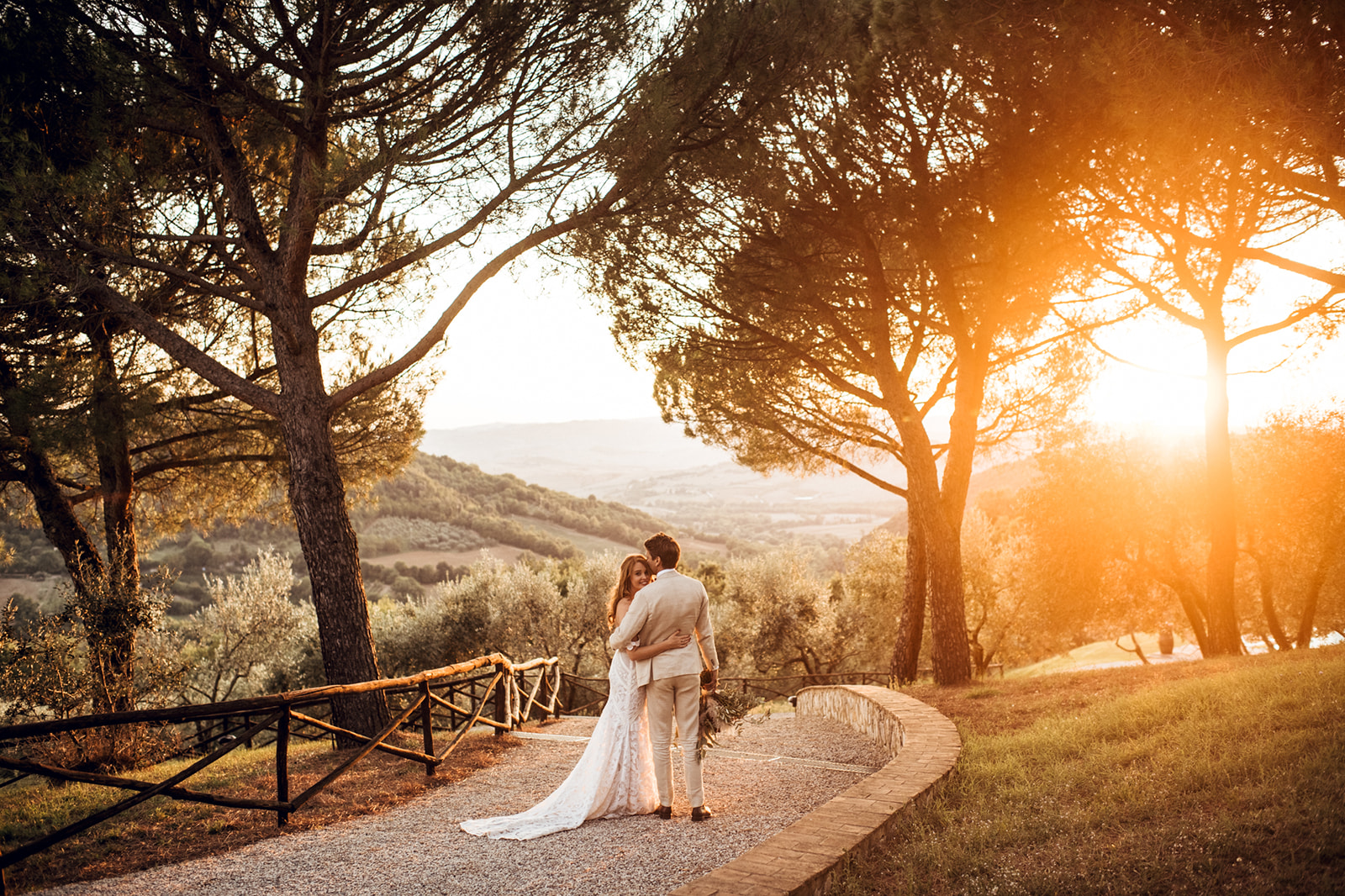
If you are looking for a wedding photographer in Italy, you have landed in the right place. Italy has been one of my favorite destinations since I started photographing weddings full time over a decade ago. The light in Tuscany, the coastal drama of Amalfi, the quiet grandeur of Lake Como. Each region offers something the others cannot. I am a Stockholm-based wedding photographer in Italy several times a year, documenting weddings for Swedish, British, American and European couples who want their day captured honestly.
Italian weddings work differently from Nordic ones. The pace is slower, the meals are longer, and the light lingers well into the evening. Venues range from private agriturismos in the Chianti hills to cliffside villas above the Tyrrhenian Sea. Some couples choose a full three-day celebration with a borgo buyout. Others want a quiet afternoon ceremony followed by dinner at a local trattoria. Both can be beautiful, and both deserve careful photography.
This guide covers what I have learned from working as a wedding photographer in Italy: the regions and venues I know best, what the legal process looks like for non-Italian couples, how to budget realistically, and the practical questions that come up again and again. If you are still early in your planning, the resources below should give you enough to move forward with confidence.
Italian regions for destination weddings
Italy is not one wedding destination. It is several, each with its own climate, architecture and rhythm. The right region depends on the experience you want your guests to have more than on any photographer’s preference.
Tuscany: farmhouses, cypress trees and golden light
Tuscany is where most couples start looking, and for good reason. The landscape between Florence and Siena, the Val d’Orcia with its cypress-lined roads, and smaller hilltop towns like Cortona and San Gimignano have been photographed so often they feel familiar before you ever visit. Venues run from modest agriturismos with ten rooms to full borgo rentals that sleep a hundred guests. Expect olive trees, stone walls, long tables outside, and a September light that makes everything look like painted film. Tuscany is the most photographed wedding region in Italy, and the infrastructure for international weddings is well established.
The Amalfi Coast: vertical drama and sea light
The Amalfi Coast is the opposite of Tuscany in almost every way. Instead of rolling hills, you have near-vertical cliffs. Instead of stone farmhouses, you have pastel villages stacked above the water. Positano, Ravello and Praiano are the three names most couples recognise, and each has venues that feel specific to the coast and nowhere else. If you are drawn to the coast, my Amalfi Coast wedding photography guide has more detail on Casa Privata in Praiano, where I have photographed three weddings.
Lake Como: Belle Époque villas and Alpine backdrops
Lake Como sits somewhere between Tuscany’s countryside and the Alpine edge of Europe. The villas here were built in the 19th century for aristocratic families, and many of them now host weddings. Villa del Balbianello can seat 60 or 150 depending on which terrace is used. Villa Pliniana holds up to 200 guests for a seated dinner. Summer temperatures are cooler than the coast, typically 25 to 28 degrees, and the mountains across the water give photographs a scale that is hard to find elsewhere in Italy.
Venice, Rome and Sicily for something different
If you want your wedding to look like no one else’s, there are regions worth considering beyond the three above. Venice is built entirely on water and has no cars, which makes the logistics demanding and the photographs unlike anything else. Rome has civil ceremonies at the Capitoline Hill for couples who want legal Italian weddings in the city itself. Sicily, especially the baroque towns of Noto and Modica, delivers a different Italy. Sardinia offers beaches without the coastal wedding traffic of Amalfi. There is a longer view in my guide to wedding venues across Europe.
| Region | Typical capacity | Summer climate | Best for |
|---|---|---|---|
| Tuscany | 40 to 250 guests | 26 to 32 °C, dry | Countryside romance, long outdoor dinners, September light |
| Amalfi Coast | 40 to 180 (Villa Treville 80, La Rondinaia 180) | 28 to 33 °C, humid | Cliffside ceremonies, sea views, dolce vita atmosphere |
| Lake Como | 60 to 200 (Villa del Balbianello 60/150, Villa Pliniana 200) | 25 to 28 °C, cooler evenings | Refined scale, Belle Époque villas, Alpine backdrop |
| Venice | 20 to 120 guests (palazzo-dependent) | 28 to 32 °C, muggy | Water-based logistics, baroque interiors, no cars |
| Sicily / Sardinia | 40 to 200 (variable) | 28 to 34 °C | Off-the-beaten-path, lower cost per guest |
This guide is written by me, Karin Lundin, a wedding photographer based in Stockholm. Further down the page I share what it is like to photograph here. Planning a wedding and want to talk? Get in touch and we will talk.
A gallery from a wedding I photographed in Italy
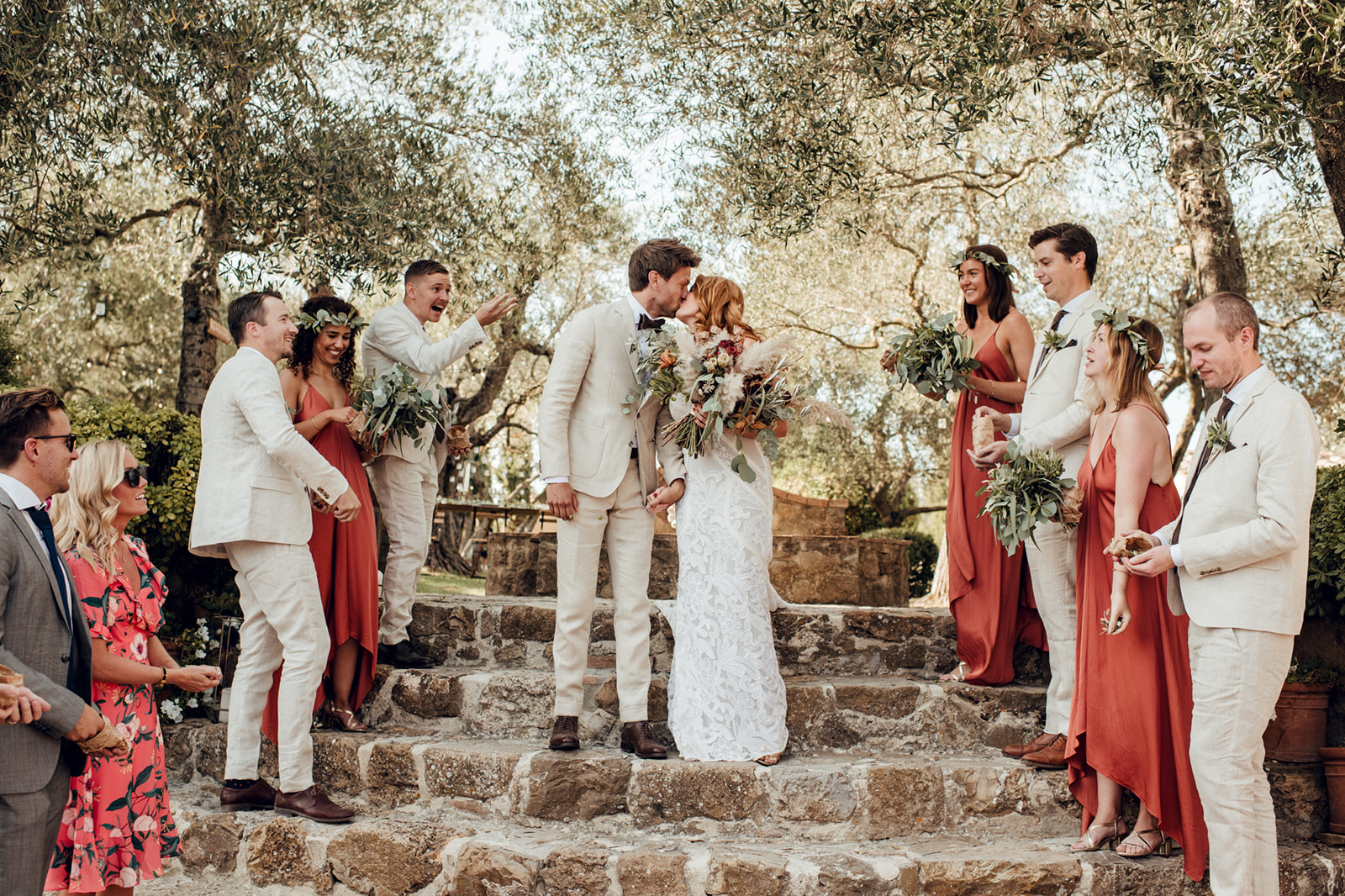
A handful of images from a recent wedding in Tuscany. Each photograph tries to catch a real moment rather than a staged pose.


Legal requirements for getting married in Italy
Getting legally married in Italy as a foreign couple involves specific paperwork and timelines. The exact process depends on your nationality. Many couples choose to complete the legal marriage at home and hold a symbolic ceremony in Italy, which simplifies the paperwork considerably without changing what the day feels like. For those who want a legal Italian wedding, here is what to expect.
Swedish couples: Äktenskapscertifikat and hindersprövning
Swedish couples start with Skatteverket in Sweden. The process is called hindersprövning, and the certificate it produces (Äktenskapscertifikat, or Certificate of Marriage Capacity) is valid for four months. For Italy, Skatteverket attaches an EU multilingual standard form so Italian authorities can read the Swedish document directly. Documents should reach the Italian Registry Office roughly two months before the wedding date. The Swedish Embassy in Rome has a detailed step-by-step guide for Swedish citizens marrying in Italy.
British, American and other nationalities
UK citizens need a Certificate of No Impediment (CNI) from their local registry office. The notice period can be up to 30 days, so start early. American couples apply for the Nulla Osta at the US Embassy in Rome or US Consulates in Florence, Milan or Naples, typically issued same-day once you are in Italy. Australians obtain their Nulla Osta at the Australian Consulate in Rome. Every non-EU couple should also ask whether an Atto Notorio (sworn statement) is required on top of the Nulla Osta.
Symbolic versus legal ceremonies
A symbolic ceremony carries no legal weight. You marry legally at home, then have the ceremony you want in Italy with readings, vows, music, officiants of your choosing, and none of the paperwork restrictions that come with civil weddings in Italian town halls. For couples with limited time on the ground or complicated residency situations, this is often the easiest path. The photography looks identical either way.
What a wedding in Italy actually costs
Italian wedding costs vary enormously with region, venue and guest count. The numbers below come from the Italian Venues 2026 Cost Guide, the Tuscany cost breakdown from Giorgia Fantin Borghi, and what I have observed working alongside planners and venues across the country.
| Category | Mid-range | High-end |
|---|---|---|
| Per guest (all in) | €400 to €600 | €800 to €1,200+ |
| Catering only | €150 to €220 per person | €220 to €300 per person |
| Agriturismo rental | €2,000 to €4,000 per night | €4,000 to €7,000 per night |
| Private villa rental | €8,000 to €15,000 per night | €15,000 to €25,000 per night |
| Full borgo (60 to 80 guests, 3 nights) | €27,000 to €30,000 | €35,000 to €60,000 |
Off-season savings are real. Weddings held in October or November typically save 20 to 30 percent on venue rental compared to June-to-September peak dates. Weekday weddings save another 10 to 20 percent. Venues that include accommodation remove transport costs between hotels and the ceremony site, which often makes them better value than a cheaper standalone venue. A Stockholm-based planner who knows Italy well is worth their fee on destination weddings. If you have not found one yet, my guide to wedding planners in Stockholm lists planners who work internationally.
When to get married in Italy for the best photography
Italy is technically a year-round wedding destination, but the difference between a June wedding and a September wedding is noticeable in photographs. Four windows matter.
May offers fresh green landscapes, cooler temperatures (18 to 24 °C in Tuscany, warmer on the coast), wildflowers in full bloom, and significantly better venue availability than peak months. The risk is occasional rain, especially inland. I like May for couples who want the countryside to look lived-in rather than dried out.
June to August is peak wedding season, and also the most expensive and most crowded. Coastal venues book up 18 months ahead. Temperatures can hit 35 °C on the Amalfi Coast and in Sicily. For photography, the midday light is harsh, so venues with natural shade (olive groves, cloisters, loggias) work better than open lawns.
September is the photographer’s favorite month. The light is lower and warmer, venues still offer full summer service, and temperatures settle into 24 to 28 °C. The grape harvest adds atmosphere in Tuscany. Book early. September availability disappears faster than people expect.
October is the real hidden window. Autumn colors in Tuscany, quieter venues, dramatic coastal light, and savings of 20 to 30 percent on rental fees. The weather is less predictable but the photographs are often the strongest of the year.
A photographer’s perspective on weddings in Italy

My name is Karin Lundin and I am a wedding photographer based in Stockholm. I have a sociology background, which shapes how I read a room more than my gear does. I am looking for the moments between the programme items: the grandmother tearing up during the father’s speech, the two children whispering under the table, the groom adjusting his boutonniere alone before anyone sees him. Those are the photographs I want you to find ten years from now.
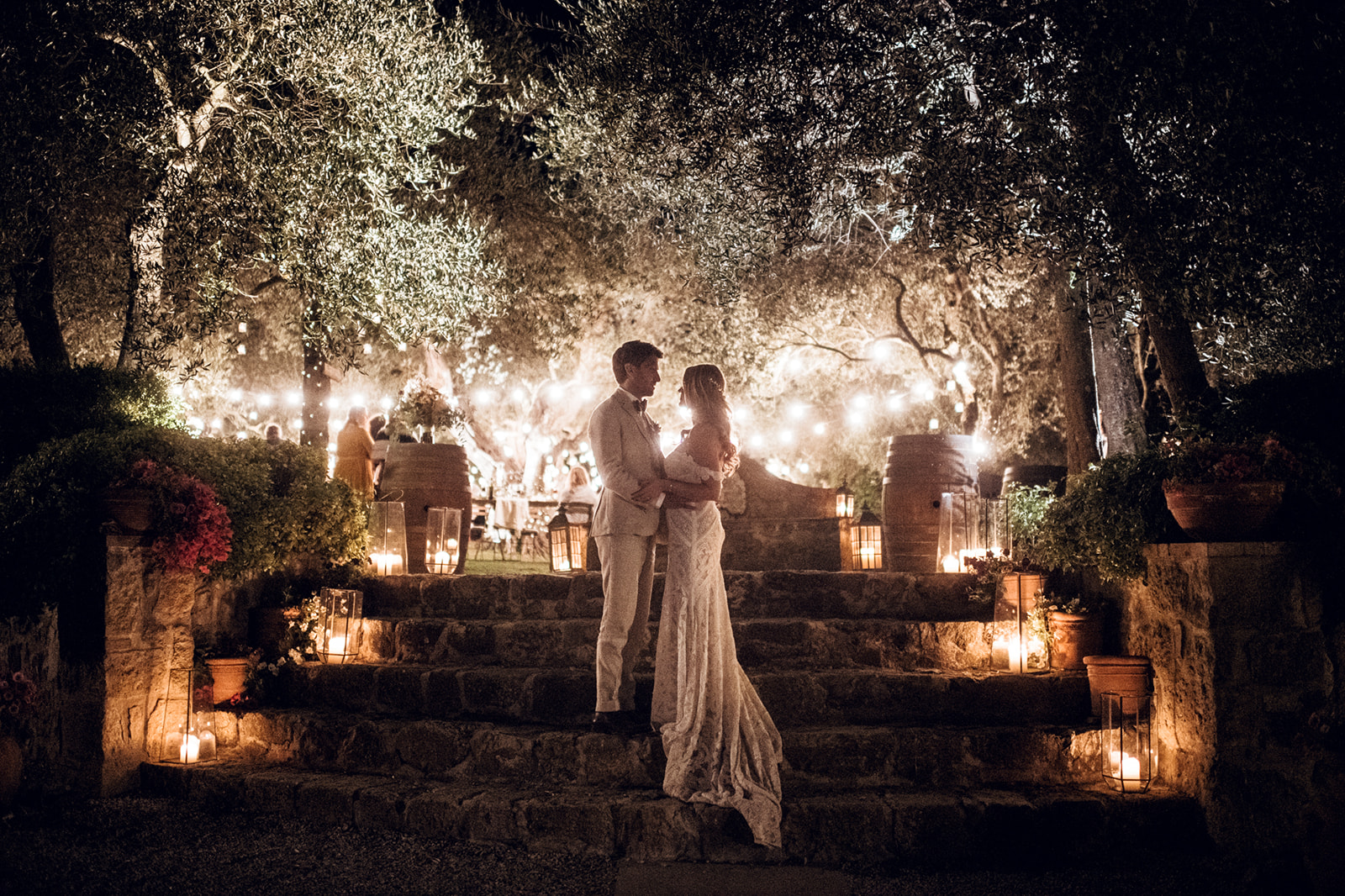
Italian weddings give me more of those moments than almost anywhere else I work. The pace helps. A long Italian dinner runs three or four hours and each course brings a new rhythm. Speeches are rarely rushed. Guests linger over espresso in a way they simply do not at home. For a documentary photographer, the extra time is a gift. I am not hunting the one frame that matters. I am watching a story unfold across an afternoon and into the evening.
Practical notes from photographing in Italy: I travel with two camera bodies and a small 35mm film kit for the moments that want slower light. I work primarily in natural light and plan the timeline around sunset rather than fighting against it. I stay out of the way during the ceremony and family time. I bring small snacks so I am not waiting for kitchen breaks when the light turns golden. I have a room near the venue where I can recharge between ceremony and reception, especially on warmer days.
Want to capture the day on film as well? I often work alongside Nordvér Films. My partner there has a similar documentary approach, and we coordinate so neither of us gets in the way of the other or of the day. Film and photography together tell a more complete story, especially at destination weddings where family and friends cannot always travel. If you want to see how I work, there is a separate page about fine art wedding photography in Sweden.
If you want to see how my approach translates to other parts of the Mediterranean, my guides on wedding photography in Greece and my recent work at Lesante Cape on Zakynthos show similar weddings with different backdrops. For Central Europe, my Vienna wedding photography guide covers Austrian weddings with many of the same destination-wedding dynamics.
If Tuscany is the region you keep coming back to, my separate guide to wedding venues in Val d’Orcia compares the estates and villas in the valley south of Siena, with the legal steps for foreign couples and the best months for light.
Key takeaways
- Italy is not one destination. Tuscany, Amalfi, Lake Como, Venice and Sicily each photograph differently and suit different couples.
- Budget €400 to €600 per guest for a mid-range Italian wedding, €800 to €1,200 or more for high-end. Full borgos start around €27,000 for three nights.
- The Swedish hindersprövning certificate (Äktenskapscertifikat) is valid for four months. Plan to have it in Italian hands two months before the wedding.
- Symbolic ceremonies skip most of the legal paperwork. Marry legally at home, celebrate in Italy however you like.
- Peak season (June to September) books 12 to 24 months ahead. May and late September offer similar weather with more availability and better light.
- Work with a destination wedding planner. The logistics, vendor relationships and legal steps are hard to coordinate from abroad without one.
Common misconceptions about Italian weddings
“September is too hot.” September is one of the most comfortable months for an Italian wedding. Temperatures usually stay below 30 °C, the light is low and warm, and venues are still running their full summer operation.
“The Amalfi Coast is easy to reach.” It is not. Naples airport is the closest major airport, and the drive to Praiano or Positano takes around 90 minutes on winding coastal roads. Plan an extra day for guest arrival.
“A legal wedding in Italy is cheaper than a symbolic one.” The paperwork, translations, apostilles and timelines for a legal Italian wedding often cost more in total than marrying at home and having a symbolic ceremony in Italy. Ask your planner for the real comparison before you commit.
“Small weddings are not worth the travel.” Elopements and intimate weddings of 10 to 30 guests are the fastest-growing category in Italy, and venues like agriturismos, small piazzas and historic chapels are built for exactly that scale.
Frequently asked questions about weddings in Italy
How far in advance should I book my wedding photographer in Italy?
Between 12 and 18 months for peak season (June to September), 8 to 12 months for shoulder months. Ultra-popular venues book 18 to 24 months ahead, and photographers who regularly work in Italy tend to follow the same timeline.
Do Swedish couples need a Nulla Osta to marry in Italy?
Swedish couples provide the Äktenskapscertifikat (Certificate of Marriage Capacity) issued by Skatteverket after hindersprövning, with an EU multilingual standard form attached. This serves the same purpose as the Nulla Osta and is usually accepted directly by Italian authorities without further translation.
Is Italian wedding photography more expensive than Swedish wedding photography?
Not necessarily. The photographer fee is often similar. What adds cost is travel, extra days of coverage (many Italian weddings run two or three days with welcome dinners and farewell brunches), and sometimes a second photographer for large guest counts.
How many days should I book my photographer for?
A single wedding day in Italy typically runs 10 to 12 hours of coverage. For destination weddings with welcome dinners and farewell brunches, 2 or 3 days of coverage is common. Elopements need 4 to 6 hours.
What about the weather in May and October?
Both are lovely and both carry some rain risk. May sees occasional afternoon showers, October brings the first autumn storms. Venues with covered ceremony options (loggias, orangeries, indoor halls) handle this cleanly. Always have a plan B for outdoor ceremonies.
Can you photograph weddings in other European countries too?
Yes. I photograph across Europe, with frequent work in Greece, the Amalfi Coast, Vienna and Scandinavia. My Stockholm venue guide covers the Nordic side of my work.
Do I need a local wedding coordinator if I have a photographer?
Yes, for destination weddings absolutely. A planner handles vendor logistics, legal paperwork, timeline, transport and the hundred small coordination decisions that would otherwise fall on you. The photographer’s role is documentation, not coordination.
What if my ceremony is a symbolic one?
It does not change the photography at all. The difference is legal, not visual. Symbolic ceremonies often allow more creative freedom in terms of officiant, location and format, which can actually produce more memorable photographs.
Planning a wedding? I am happy to talk about how your day could look in pictures. Get in touch and we will talk.